Share





Published on: 25/03/2026Updated on: 25/03/2026
The individual employment and domestic work sector is emerging as a promising driver for the future in Brittany, with nearly 33,000 positions to be filled by 2035. To structure and energize this sector, IPERIA, France Travail, FEPEM and Cheops Bretagne have signed a three-year agreement aimed at boosting attractiveness, securing employment relationships, and professionalizing the workforce. Acting in a coordinated and organized way, by leveraging each partner’s expertise, is key to this regional initiative serving families, older adults, dependent persons and people with disabilities.Home-based employment in Brittany: 33,000 positions to
A partnership supporting home-based employment in Brittany
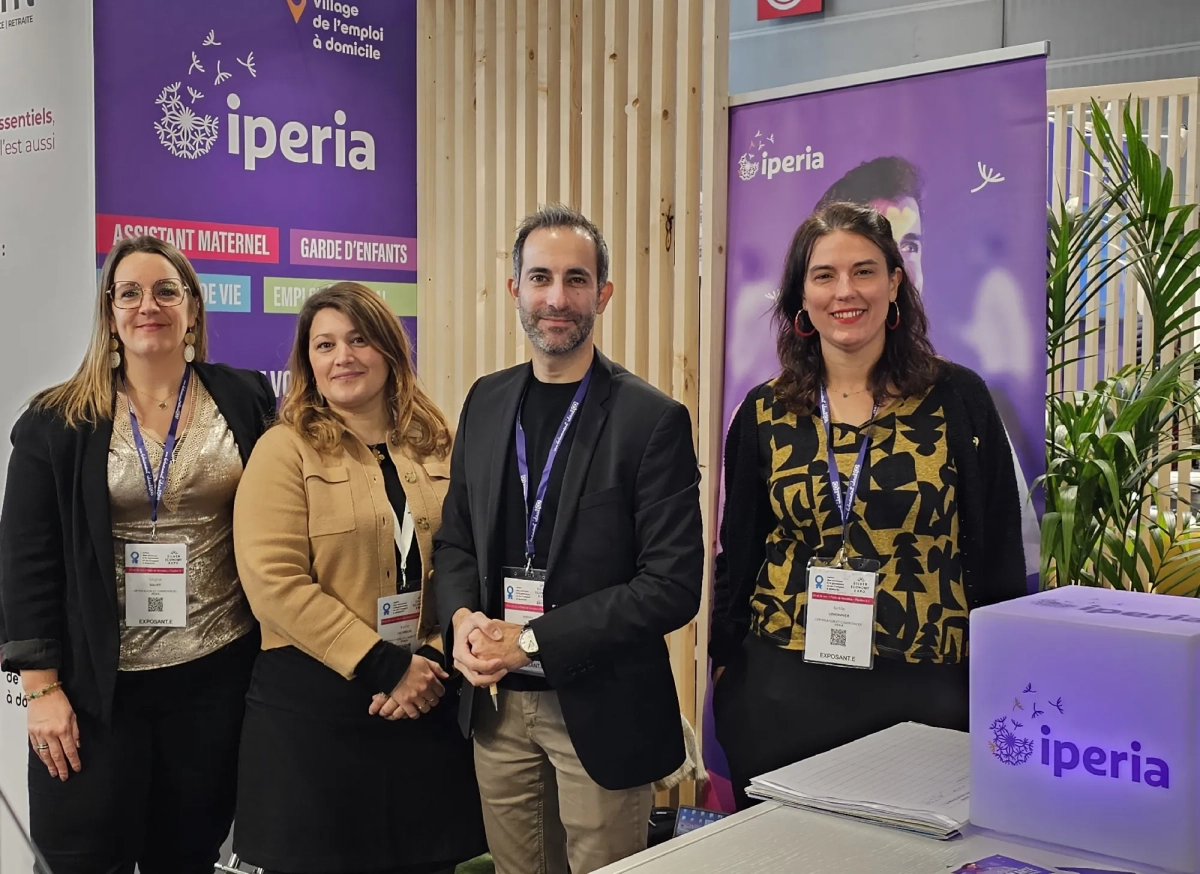
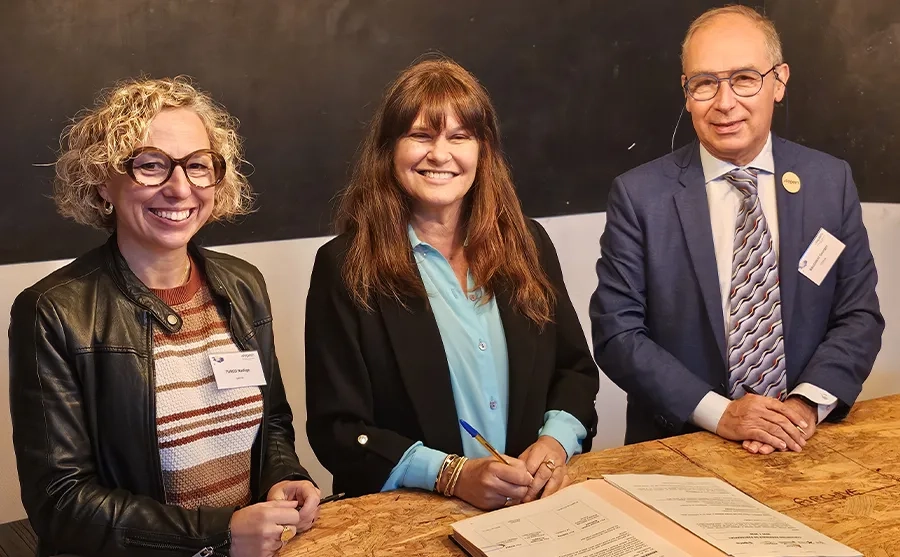
“We need proximity. National action is meaningless if we are not mobilised at territorial level.” On October 1st in Lorient, Nadège Turco, Deputy Director of IPERIA, signed a partnership agreement with Angélique Goodall, Regional Director of France Travail in Brittany, and Georges Baudinat, President of the delegation of Brittany of Fepem – French Federation of Individual Employers.
Cheops Bretagne is also a partner to this three-year agreement, co-signed by IPERIA as part of its delegated mission for the professional branch of individual employers and home-based employment. The agreement pursues several objectives: strengthening the attractiveness of the sector in Brittany, securing employment relationships and supporting the professionalisation of occupations.
For Angélique Goodall, “these agreements are designed in consultation both upstream and downstream, and built from field realities. We establish a diagnosis and work towards joint action. That is the purpose of the agreement: to define strong priorities and commitments.”
Home-based employment: a strategic sector for the future of Brittany
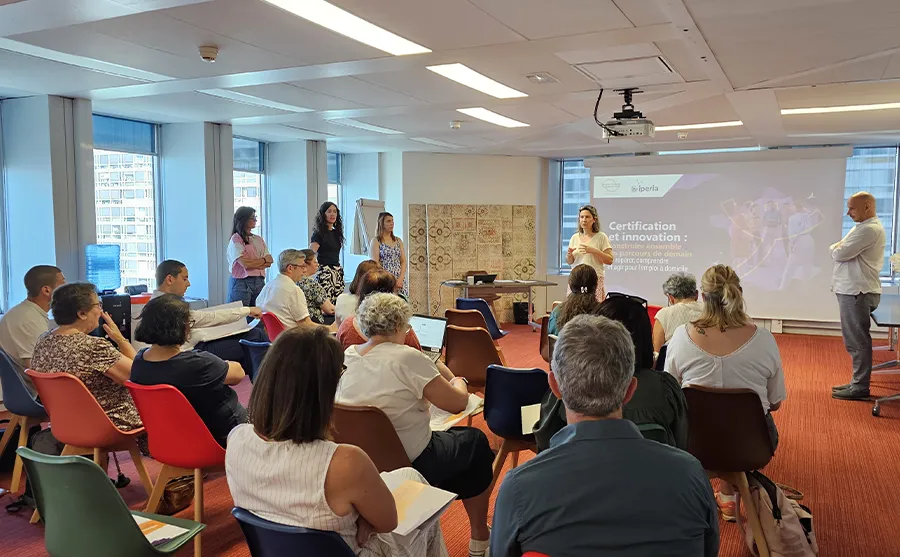
During a morning of discussions, workshops and round tables, Véronique Lagandré, Head of Study Department of Fepem, presented an overview of the current and future state of the sector in Brittany, based on studies and surveys. In 2025, the sector represents 206,207 individual employers and 62,825 employees. 13.4% of households in the region use home-based employment (compared with around 12% at national level).
Specific regional challenges are emerging for families, older people, dependent individuals and people with disabilities: population ageing, the need to support ageing in place in rural areas, and a high number of childminders approaching retirement.
Projections point to the need for coordinated and rapid action: 32,643 jobs to be filled by 2035 in Brittany.
Concrete actions deployed and planned across the territory
In his speech, Georges Baudinat, President of the Brittany delegation of FEPEM, placed this agreement within the broader context of “La Route du Dom”, launched in 2022. Its objective is to ensure that, by 2030–2035, sufficient numbers of workers are available to meet the growing needs of individual employers in the region. The signing in Lorient marks an important milestone for the future. He added: “The Lorient area is one of those places where many initiatives are emerging, with training organisations, France Travail stakeholders, and local authorities working together on home-based employment challenges and territorial needs. We should also highlight the role of intermediary organisations supporting individual employers, which are well established in the region.”
Il a rappelé d’autres initiatives importantes mises en place depuis 3 ans parmi lesquelles une action de formation destinée à la petite enfance en Cornouaille (sud Finistère), la montée en puissance de France Emploi Domicile auprès des salariés et employeurs, mais également l’expérimentation lancée en 2024 à Lorient sur le futur titre « Auxiliaire Entretien du Cadre de Vie » (AECV), dont la mission a été déléguée à IPERIA en partenariat avec France Travail et l’organisme de formation Agora Services.He also recalled several key initiatives launched over the past three years, including a training initiative dedicated to early childhood in Cornouaille (southern Finistère), the growing role of France Emploi Domicile among employees and employers and also the 2024 experiment in Lorient on the future qualification “Life Maintenance Assistant” (AECV), entrusted to IPERIA in partnership with France Travail and the training organisation Agora Services.
Concrete feedback on the “Life Maintenance Assistant” certification
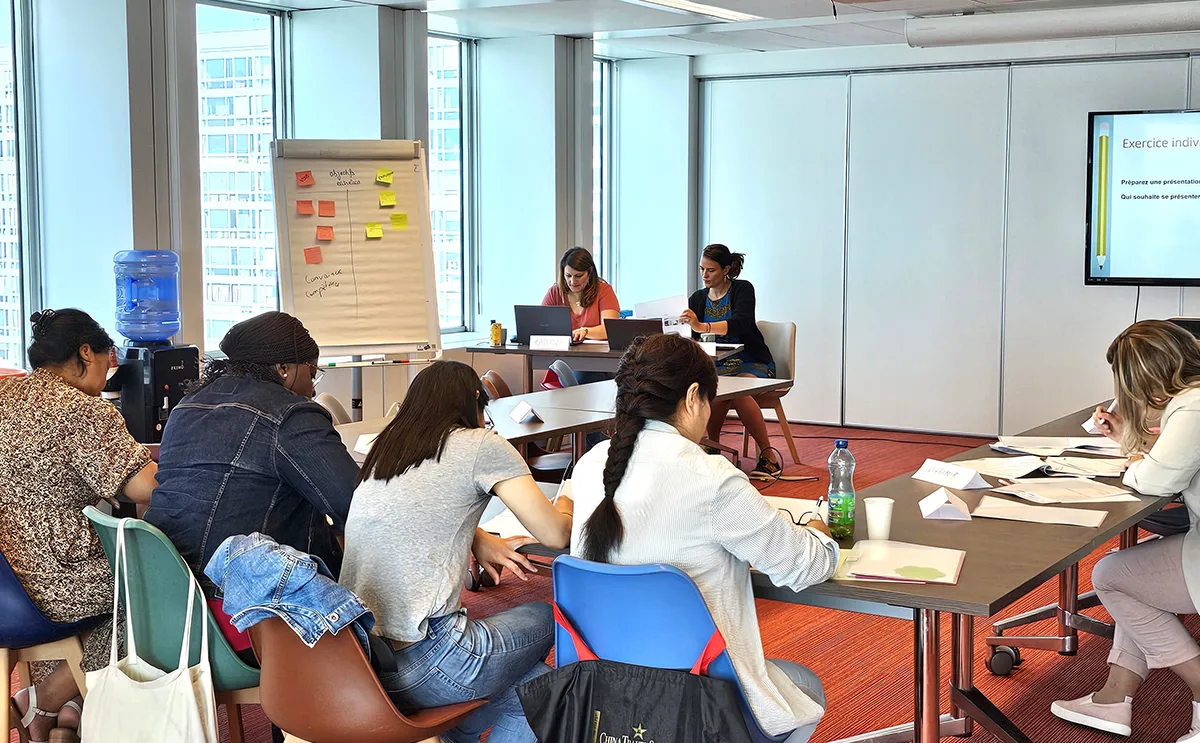
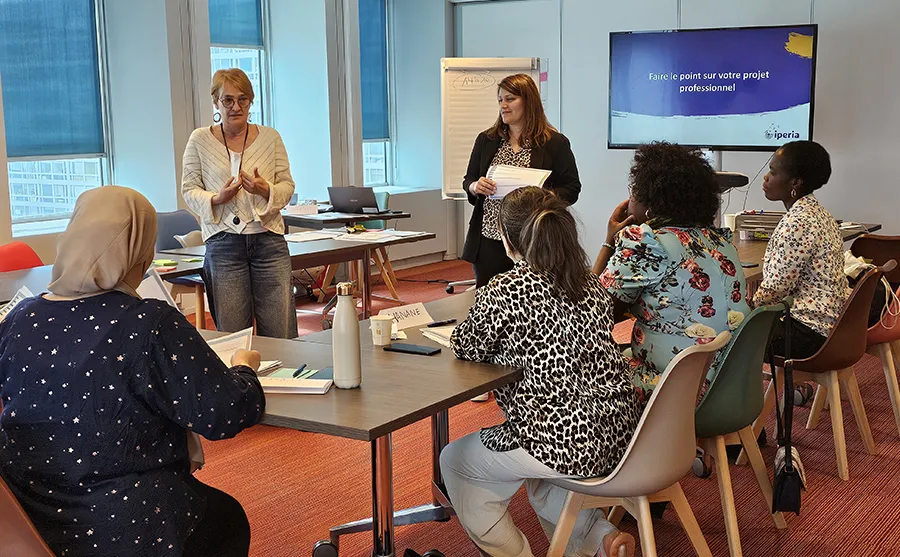
The day of exchanges also provided practical feedback on the Breton pilot programme for the “Life Maintenance Assistant” qualification, delivered by the sector and certified by IPERIA. Sophie Pannetier explained that the training programme consists of 35 hours of work placement, 140 hours of training, 14 hours of individual support and 3 hours of assessment. She emphasised the importance, at the end of the programme, of encouraging learners "to engage with the individual employer sector so that they feel sufficiently autonomous to manage their professional relationships independently". Alongside her, Dehbia, a learner, shared her experience. Prior to this programme, she had never pursued formal education or employment. Now employed, she stated: “My life has changed. Today I am proud to work in a profession that is deeply meaningful on a human level.” “This testimony gives meaning to our actions,” added Christine Stangacciu, France Travail Partner.
Innovation and professionalisation: key drivers for the sector
In line with these testimonies, Nadège Turco highlighted the ambitious policy of the individual employers and home-based employment sector, implemented by IPERIA under its delegated mission.
She emphasised the importance of experimentation:
“Innovation is the cornerstone of the sector, essential to developing occupations, supporting employees, professionalising roles and responding to the needs of individual employers.” She also recalled that “30 years of sector-level thinking have led to a strong framework built around three pillars: support, skills and personalisation. The latest development is the sector-specific career guidance and professional development offering (COEPS).”
“Innovation is the cornerstone of the sector, essential to developing occupations, supporting employees, professionalising roles and responding to the needs of individual employers.” She also recalled that “30 years of sector-level thinking have led to a strong framework built around three pillars: support, skills and personalisation. The latest development is the sector-specific career guidance and professional development offering (COEPS).”
Deputy Director added that "the sector has developed a structured professional pathway built around around ten certifications, allowing (future) employees to enter at any level and progress through training or Recognition of Prior Learning (VAE). This progression is made possible through funding schemes such as the sector’s skills development plan", as well as support mechanisms like Relais Assistants de Vie (RAVie).
Strategic priorities aligned with the national level
These concrete initiatives, combined with the expertise of the partner organisations, aim to enable Brittany to benefit from the four major pillars already implemented nationwide: recruitment, attractiveness, professionalisation, return to employment.
Angélique Goodall encouraged stakeholders to “reach out to all individuals to inform them, and also to new audiences, showing them that they can access free services and that our actions are innovative and have a real impact on the ground.” She concluded: “The objective is full employment and enabling society to thrive—by supporting care for others and connecting needs with solutions.”
Nadège Turco added: “We will succeed if two conditions are met: first, that all advisors fully understand and can present the sector; second, that they are able to propose suitable career pathways.”
Finally, Georges Baudinat expressed the wish “that the sector becomes better known and recognised, and that this strong human relationship between individual employers and employees continues. We are betting on this relational intelligence.”