Share





Published on: 02/06/2026Updated on: 02/06/2026
France Compétences has renewed for three years six certifications registered in the Specific Register (RS), developed by IPERIA on behalf of the professional sector for individual employers and home-based employment. This decision validates months of rigorous engineering work carried out collectively with sector stakeholders and teams, closely aligned with field realities, employees’ aspirations and the evolving needs of the professions.
An Official Decision with Concrete Benefits for Sector Professionals
France Compétences has granted a three-year renewal of registration for six certifications listed in the Specific Register (RS):
- RS7545 — Supporting a Child with Autism Spectrum Disorder in Daily Life
- RS7546 — Supporting a Child with a Disability in Daily Life
- RS7547 — Creating a Childminders' House (MAM)
- RS7548 — Working Collaboratively in a Childminders' House (MAM)
- RS7549 — Adapting Home-Based Support for an Adult with Cognitive Disorders
- RS7550 — Adapting Home-Based Support for a Person with a Physical Disability
France Compétences: Requirements and Recognition
The registration and renewal of a certification in the Specific Register (RS) requires convincing an independent national authority of the relevance of the certified skills, their alignment with labour market needs and the practical value of the training pathways offered to professionals.
France Compétences acts as both regulator and guarantor of the quality of professional certifications in France. It examines renewal applications thoroughly, reviewing evidence-based data, documented feedback and proof of impact on employability and professional practices. Securing approval is far from a formality; it validates serious, methodical work supported by tangible evidence.
This three-year renewal therefore represents strong institutional recognition of the quality and robustness of the work carried out on behalf of the professional sector and in service of both employees and individual employers.
A Long-Term Engineering Effort Driven Collectively
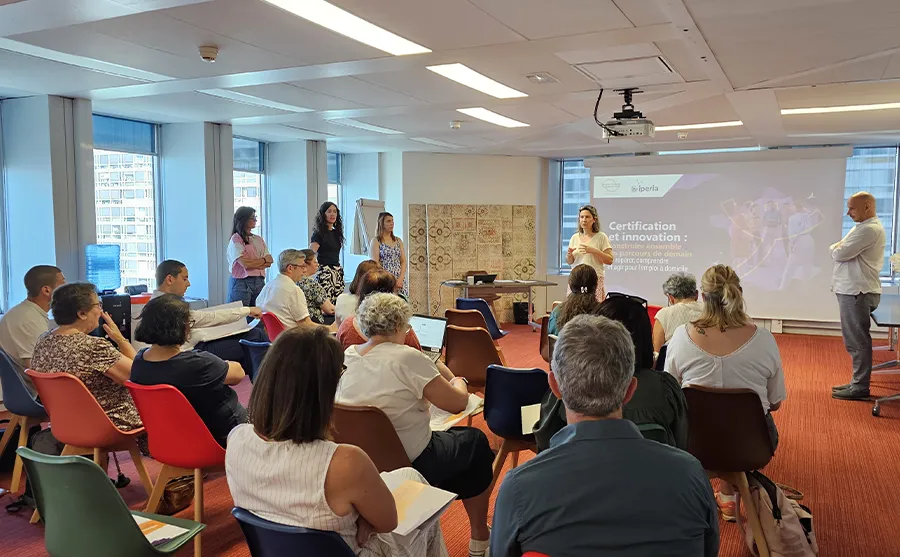
This achievement is the result of a process launched well ahead of the renewal deadline. Since early 2025, IPERIA’s teams, led by the Professional Occupations and Certification Engineering Department, have coordinated a rigorous and collaborative renewal process.
Listening, Observing and Analysing: A Method Grounded in Reality
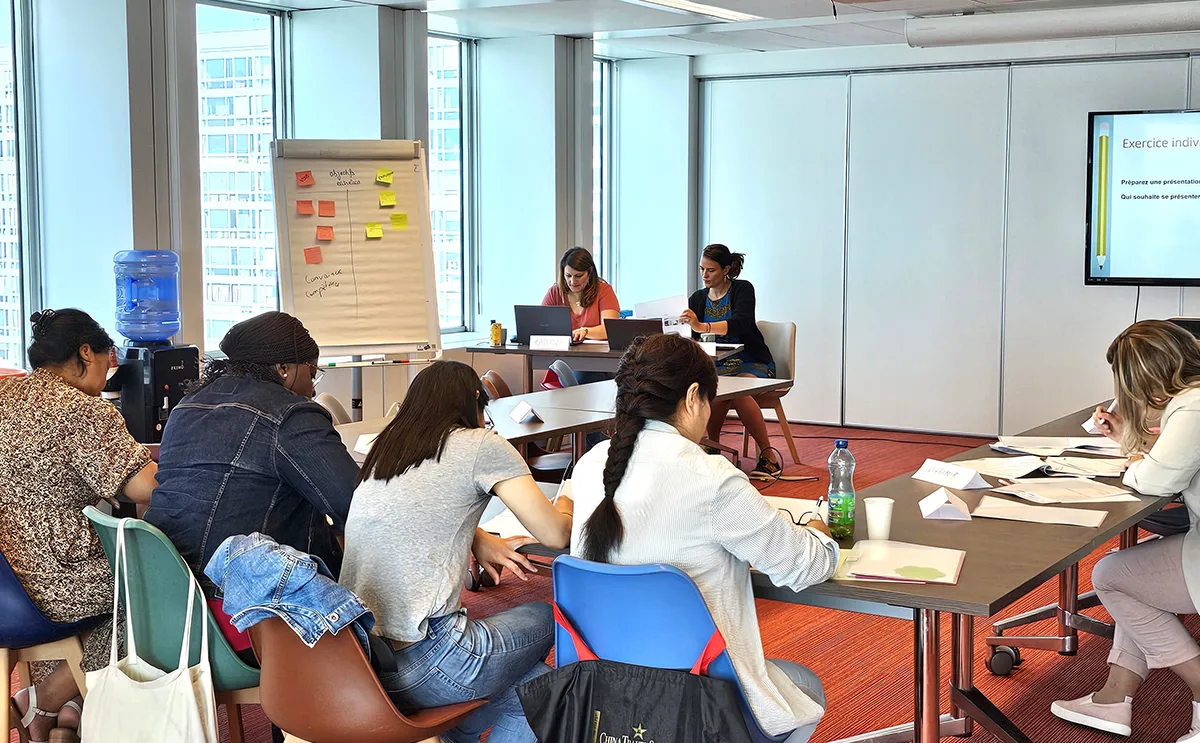
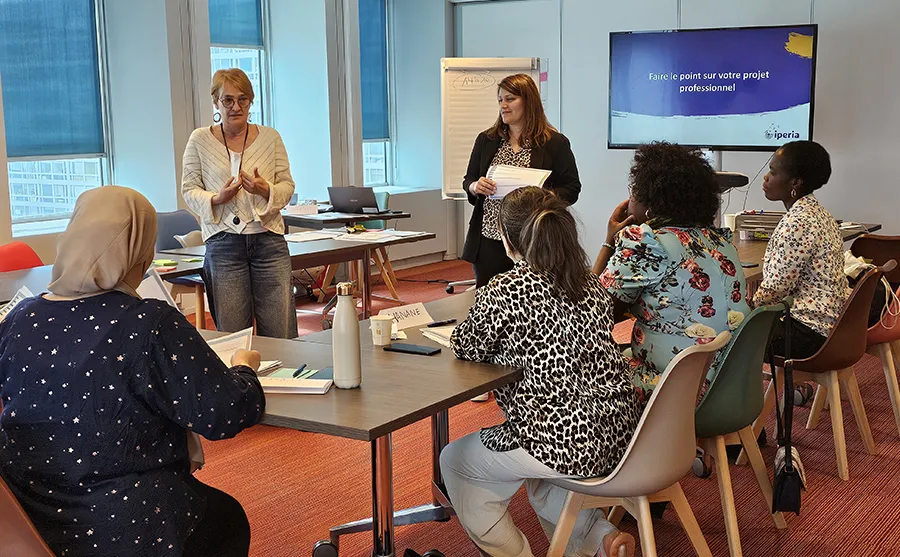
Preparing the renewal required engaging directly with professionals, listening to employees about their daily work and observing the skills they actually use in practice.
Visits were conducted in Childminders' Houses (MAMs), and working groups brought together representatives of the professional sector, individual employers, family caregivers, employees, training providers and specialists in disability, autism spectrum disorders and cognitive disorders. This work was complemented by analysis of requests received through IPERIA’s telephone platform, monitoring of social media discussions, surveys, interviews and ongoing observation of social, regulatory and sector developments.
Visits were conducted in Childminders' Houses (MAMs), and working groups brought together representatives of the professional sector, individual employers, family caregivers, employees, training providers and specialists in disability, autism spectrum disorders and cognitive disorders. This work was complemented by analysis of requests received through IPERIA’s telephone platform, monitoring of social media discussions, surveys, interviews and ongoing observation of social, regulatory and sector developments.
A Collective Internal Commitment
The project mobilised numerous teams across IPERIA, including the Professional Occupations and Certification Engineering Department, the Projects Unit, the Certification Management Department, the Telephone Platform, the Quality Department, the Occupations and Qualifications Foresight Teams, Institutional Relations teams, Professionalisation Development teams and partners from the Home Employment University (UDD). This collective, cross-functional effort was carried out within the framework of the sector mandate entrusted to IPERIA by the National Joint Commission for Employment and Vocational Training (CPNEFP).
Certifications Serving Employees and Individual Employers
Recognising Skills Means Recognising Professionals
The challenge extends far beyond the administrative complexity of a renewal application. It reflects a broader vision: that of a sector that continues to structure and professionalise itself while placing people—both employees and employers—at the centre of its skills recognition framework.
The six renewed certificates respond to growing and tangible needs: supporting children with disabilities or autism spectrum disorders, creating or working within a Childminders' House (MAM), supporting individuals with cognitive disorders at home and assisting people with physical disabilities.
These are everyday professional realities where skills development cannot be left to chance.
The renewal of these certificates sends a strong message: the skills of sector professionals deserve to be formally recognised, valued and continuously aligned with changing societal expectations and family needs.
Certification Engineering Reflected in the Structure of the Qualifications
The evolution of these certificates is not limited to updating competency frameworks. It is also reflected in their overall structure. One example is the vocational qualification Working in a Childminders' House (MAM), initially registered as a single certification in 2021. It has now been divided into two distinct certificates: Creating a Childminders' House (RS7547) and Working Collaboratively in a Childminders' House (RS7548)
This evolution reflects two clearly different professional realities: that of a childminder leading the creation of a new structure, including administrative procedures, management responsibilities and team cohesion, and that of a professional joining an existing MAM, seeking to integrate effectively and further develop their practice.
Two professional roles, two sets of competencies and two certification pathways. This level of precision is precisely what characterises meticulous certification engineering that remains attentive to field realities.
This evolution reflects two clearly different professional realities: that of a childminder leading the creation of a new structure, including administrative procedures, management responsibilities and team cohesion, and that of a professional joining an existing MAM, seeking to integrate effectively and further develop their practice.
Two professional roles, two sets of competencies and two certification pathways. This level of precision is precisely what characterises meticulous certification engineering that remains attentive to field realities.
What Comes Next?
The renewal of these six RS certificates opens a new chapter. Certification pathways will continue to be available to sector employees with updated and enriched competency frameworks.For IPERIA, this achievement is also a starting point: a renewed commitment to continue observing, listening and anticipating so that future certifications remain closely aligned with the real needs of the women and men who make home-based professions possible every day.
These six certificates form part of a broader portfolio. IPERIA currently manages seven certifications registered in the Specific Register, including the certification introduced in 2024: Coordinating Stakeholder Interventions Around the Individual Employer to Support Independent Living at Home.
Discover how IPERIA leads skills certification within the individual employers and home-based employment sector.