Share


Published on: 07/10/2026Updated on: 09/10/2026
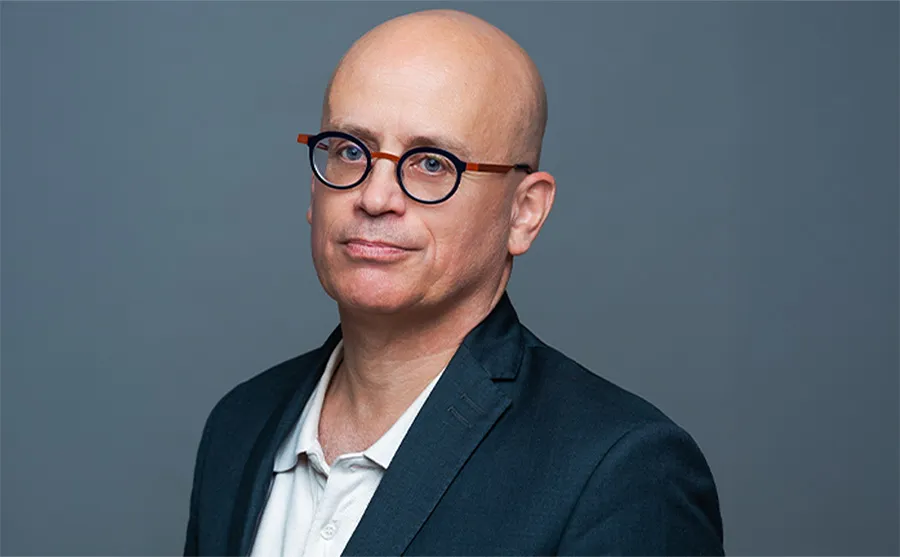
Semaine Bleue, France's national awareness week dedicated to older people and retirees, is focusing its 2026 edition on intergenerational connections. Sociologist Serge Guérin¹ places this theme within its wider demographic and social context, while Thomas, a 24-year-old Care Assistant, brings it to life through his everyday professional experience.
A "Generation War" That Isn't Happening
For Serge Guérin, the choice of theme for Semaine Bleue 2026 challenges a prevailing narrative that consistently portrays younger and older generations as being in opposition. "There is no generation war. There is far less conflict between generations than people suggest," he argues. Instead, the sociologist observes that differences within age groups are now often more pronounced than those between generations. Geographical inequalities, cultural differences and increasingly diverse life experiences shape people's lives, whether they are 20 or 80 years old.
This analysis reflects a clear demographic reality highlighted by INSEE, France's National Institute of Statistics and Economic Studies. France currently has approximately 15.3 million people aged 65 and over, including 4.3 million aged 80 and over. These figures are expected to rise significantly over the coming decades, while the population aged under 20 is declining. These demographic changes make intergenerational solidarity increasingly essential, not only within families but also in professional care and support services.
This analysis reflects a clear demographic reality highlighted by INSEE, France's National Institute of Statistics and Economic Studies. France currently has approximately 15.3 million people aged 65 and over, including 4.3 million aged 80 and over. These figures are expected to rise significantly over the coming decades, while the population aged under 20 is declining. These demographic changes make intergenerational solidarity increasingly essential, not only within families but also in professional care and support services.
Home-Based Care: Where Intergenerational Exchange Comes to Life
For Serge Guérin, one of the clearest examples of intergenerational connection can be found in the relationship between a home-based employee and the person they support. "It might be a 25-year-old caring for someone old enough to be their grandparent or even great-grandparent. When the relationship works well, young people say, 'I'm learning so much.'" He highlights a fundamental shift in how knowledge is shared. Learning no longer flows exclusively from older generations to younger ones; it now works in both directions. "In the past, we learnt from older people. Today, we also teach older people. That's what reciprocity means, and that's the essence of intergenerational relationships."
The experience of Thomas, a 24-year-old Care Assistant based in Chambéry, illustrates this principle.He recalls introducing an isolated older person to digital entertainment: "I introduced them to Netflix and YouTube. Now they have more leisure activities and things to do, especially as they can no longer go out very often." But the exchange also works the other way around. "I also remember a lady who taught me a useful household tip, which I then passed on to someone else." Thomas is particularly interested in tools that encourage intergenerational communication, such as Famileo, a family magazine service that helps relatives stay connected across distances, and memory books designed to preserve family stories. He regularly recommends these resources to the people he supports.On one occasion, the relationships he had developed through his work even enabled two old friends who had lost touch to reconnect.
The experience of Thomas, a 24-year-old Care Assistant based in Chambéry, illustrates this principle.He recalls introducing an isolated older person to digital entertainment: "I introduced them to Netflix and YouTube. Now they have more leisure activities and things to do, especially as they can no longer go out very often." But the exchange also works the other way around. "I also remember a lady who taught me a useful household tip, which I then passed on to someone else." Thomas is particularly interested in tools that encourage intergenerational communication, such as Famileo, a family magazine service that helps relatives stay connected across distances, and memory books designed to preserve family stories. He regularly recommends these resources to the people he supports.On one occasion, the relationships he had developed through his work even enabled two old friends who had lost touch to reconnect.
A Career That Often Begins with an Unexpected Discovery
Thomas's career path also reflects another point raised by Serge Guérin: people do not always choose care and support occupations from the outset. Often, they discover their vocation through experience. After completing a first year at university that did not suit him, Thomas undertook a civic service placement supporting older people. It was during this experience that he discovered an interest he had never anticipated. "My supervisors asked me what I had really enjoyed, and I realised it was the relationships with older people." Looking back, he also recognises how his family experiences may have shaped this interest. He had spent considerable time helping his grandmother and had supported his father following a stroke. "It was only after choosing this career that I realised I already had the right background for it, and that I genuinely enjoyed the work."
His experience echoes Serge Guérin's sociological observations, supported by an Ipsos/Fondation Clariane survey. The research suggests that young people who have had close personal contact with older people or individuals experiencing a loss of independence are more likely to consider careers in care and support.
His experience echoes Serge Guérin's sociological observations, supported by an Ipsos/Fondation Clariane survey. The research suggests that young people who have had close personal contact with older people or individuals experiencing a loss of independence are more likely to consider careers in care and support.
Moving Beyond Narratives of Shortages and Low Professional Status
Serge Guérin draws attention to the negative assumptions that continue to affect perceptions of home-based care occupations. "This sector has been undervalued because people who have not pursued higher education, or who have struggled academically, are often directed towards it. Working in home-based care can then be perceived as a social failure, when in fact the opposite is true."
Thomas's experience challenges this perception. After initially learning through practical experience and building his professional network through word of mouth, he began a Validation of Prior Learning (VAE) process for the Care Assistant professional qualification in late 2024. He describes this decision as one of the most important steps in his career. "It's one of the best things I've done for my career. I feel it will open doors for me. It's a form of recognition, and it will also reassure the people I support." He is equally confident about his career choice: "I've found my place, and I know it's the right place for me. This work gives me a real sense of fulfilment."
Thomas also highlights an often-overlooked issue in efforts to make the sector more attractive: the limited representation of men in home-based care occupations. "I'm fighting for men to be better represented [...]. Older people are often more comfortable with a male nurse than a male Care Assistant working in their home, because the latter enters their private space."
- Support when entering the profession: recognising both the technical skills and the emotional dimensions of relationship-based work.
- Opportunities for professionals to connect: creating spaces where home-based employees can share experiences and overcome professional isolation. Thomas Combet confirms the importance of his own network of peers, including nurses, physiotherapists and other professionals: "It's important to have that network to talk things through and relieve some of the pressure, and to have people you can turn to, both for yourself and for those you support."
- Career progression and mentoring: enabling experienced professionals to move into supervisory or mentoring roles.
- Practical and symbolic recognition: including priority access to housing and improved mobility arrangements, similar to those available to other professions providing essential social services.
Training as a Means of Sharing Knowledge and Developing Professional Skills
Thomas explains that his professional experience led him to pursue a Validation of Prior Learning (VAE) pathway, through which he successfully validated four of the five competency blocks required for the qualification. He deliberately chose the Care Assistant professional qualification because it places particular emphasis on "supporting people and interpersonal qualities, as well as practical skills."
His testimony also highlights a training need that receives less attention: learning how to manage complex or unusual situations. He recalls supporting a person living with Diogenes syndrome. Rather than insisting that the person tidy their home, he had to prioritise listening, patience and the development of trust. This experience illustrates why professional training needs to go beyond technical tasks and equip Care Assistants to navigate complex interpersonal situations.
His testimony also highlights a training need that receives less attention: learning how to manage complex or unusual situations. He recalls supporting a person living with Diogenes syndrome. Rather than insisting that the person tidy their home, he had to prioritise listening, patience and the development of trust. This experience illustrates why professional training needs to go beyond technical tasks and equip Care Assistants to navigate complex interpersonal situations.
International Perspectives That Raise Questions About the French Model
To broaden the discussion, Serge Guérin points to the Nordic countries, particularly Denmark, where the statutory retirement age is set to reach 70 by 2040. He describes a society in which age is not automatically associated with a decline in professional value. "The countries with the highest life expectancy are also those where people work the longest," he observes. Thomas offers another perspective following a trip to the Spanish Basque Country. "I discovered a different approach to personal care and support [...]. They do a great deal for older people and those who have lost their independence, including things we don't see in France." These two perspectives, one sociological and the other grounded in personal experience, point towards the same conclusion: alternative models exist, and France has opportunities to improve how it supports older people and recognises the professionals who assist them.
Semaine Bleue 2026 provides an opportunity to highlight what home-based care professionals demonstrate every day: intergenerational connections are not simply an abstract social issue. They are a lived professional reality that deserves recognition, greater visibility and structured support through training.
1 Sociologist specialising in ageing and the growing proportion of older people in society, and Chair of the Scientific Council of the Korian Foundation for Ageing Well.